Showing posts with label cochineal beetles. Show all posts

Sunday, 20 February 2011

The craft of natural dyeing

I've been interested in natural dying for quite sometime. It appeals to me the fact that you can go and gather dye materials from nature like mushrooms, tree bark, berries, flower heads, leaves.. food leftovers like onions skins, tea bags, black beans brine..oh and do you remember my beetles ? Also I tend to prefer hues and gentle coloring other than bright strong colors.

I had in my stash few hanks of this soft undyed loopy mohair so when my friend Mary, a keen natural dyer offered to teach how to dye  in exchange for some advanced knitting techniques from me ,I gave a big Yes.


There are few methods to dye with cochineal beetles , Mary's method is first to soak the whole beetles in water to soften them . That makes it easy for their crimson juice to drift into the dye bath later on. The mordant for all our experiments was alum 8% (of wool weight) plus cream of tartar 7%, the white wools and fibers were soaked in that for about hour.
Mary brought her own dye stuff; chamomile flower heads which gave light yellow, and logwood bark which gave a beautiful dark purple.

After mordanting, the pots with the wool , dye and cold water were very slowly starting to warm up, it should take about half an hour to warm to gentle simmering. The Chamomile and logwood dyes stuck to the wool quickly but the beetles dye (9% in weight) was very slow to appear . Only after hour of simmering the dye started to come out nice and red but the shade was pink, not my favourite colour . We left it to soak for about 4-5 hours more and its become even more vivid shade of pink. When buying the cochineal beetles , I saw samples of colors achieved and it ranged from deep purple, crimson, red, pink and even orangy, I need to experiments with other type of mordants ..


I gave the pink wool to a friend who was enthusiastic about the color but kept the  lovely purple hank which was dyed in the exhaust bath.
This is just the start :)


Saturday, 6 March 2010

Red gold !

Before going with the family to Lanzarote, I have looked in advance for whereabouts of yarn shops and could not find any. Then when reading about this sleepy volcanic island I discovered an unusual cultivation-cochineal Beetles ! A year ago I bought couple of books regarding natural dyes and remembered reading about the source that gives the best crimson red or carmine dyes ; its derived from carmic acid produced by scale insects such as the cochineal beetle. Here is a photo of some of the shades achieved on woven fabrics.


I read a bit about the history and it is very interesting. Apparently the Aztecs used it as a war paints and when the Spanish came across cochineal in 16th century they shipped it back to Europe and there it created a sensation. The red it produced was brighter, deeper and longer lasting than anything anyone had ever seen. It was used on the cardinal gowns, paints, cosmetics .. The Spanish guarded the secret of cochineal cultivation and it was as expensive as gold. The Spanish discovered climate in the Canary islands was perfect for the beetles.
I drove with my family to Guatisa and Mala where there are numerous cacti fields.

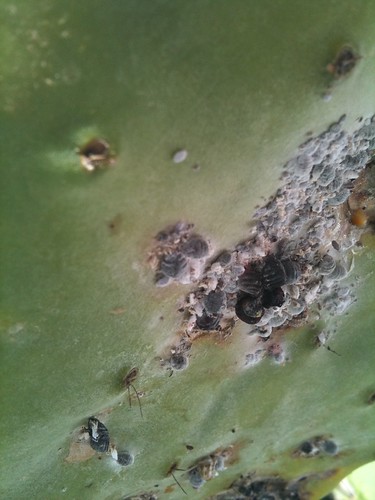
The white spots on the cacti wide leaves are the tell tale signs of the beetles. Here is a close up;

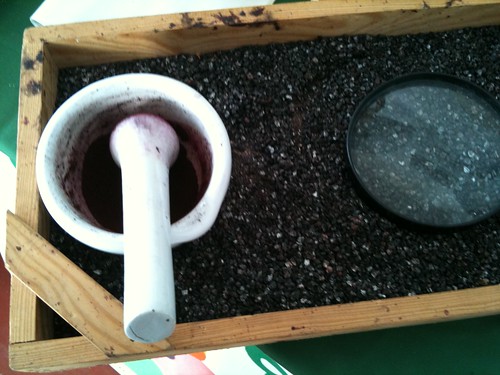
I manually removed the beetles from the leaves (and got pricked!). The beetles are fat and full with the red juice they suck from the tunera cacti. You then leave them to dry and then grind them to a red powder. The dry powder then should be filtered in hot water and I was told it is best to use those white tissue coffee filters. You should then soak the undyed yarn or fabric in it for about 25 minutes. If using acid such as vinegar or lemon juice you will get variation in the reds. I bought a fare amount of the beetles and intend to experiment.
By the way the 'jardin del cactus' in Lanzarote sell them ti tourists 2 euros for about 12-15 dry beetles. not bad!


These days many companies prefer organic dyes to chemical alternatives so the cochineal market is on its way up. Did you know that the Italian drink Campari contain cochineal ??